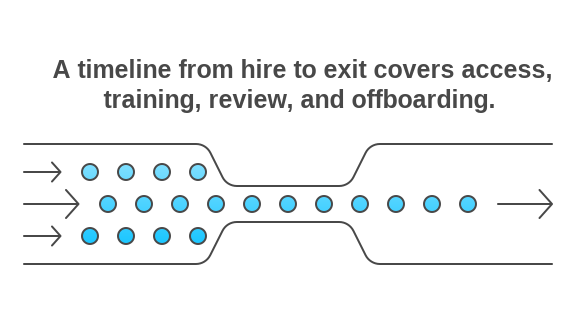
Good CUI offboarding means a person loses access to controlled data once they no longer need it. For you, that means a written plan for who gets in, when, and how fast access ends.
GSA Ready Now, powered by Capital Cyber in Leesburg, Virginia, helps GSA Schedule contractors handling Controlled Unclassified Information (CUI) meet NIST SP 800-171 Rev 3.
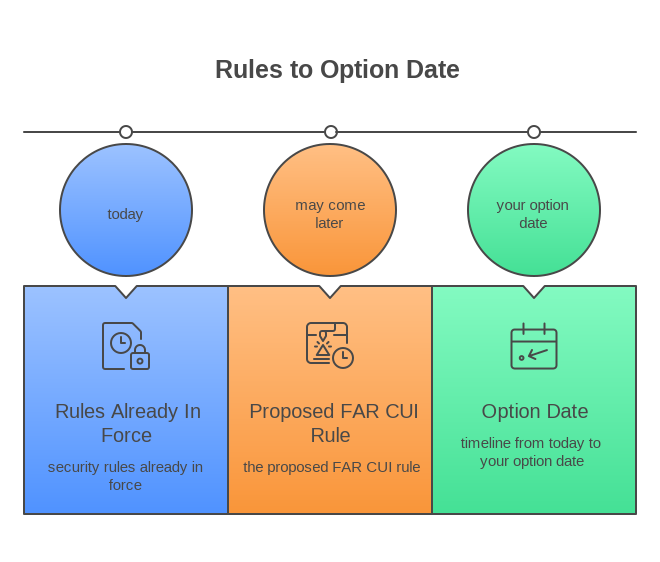
This matters more now. A proposed FAR rule would bring this standard to civilian contracts, though it is not final.
What does the proposed FAR CUI rule change for my staff?
Nothing yet. The FAR CUI rule is still a proposed rule, and it is not in force.
If it becomes final, it would add a CUI clause to civilian contracts. Contractor systems that hold CUI would need to meet NIST SP 800-171.
Some recent headlines, including one from Legal500, say the rule "is here." That wording can mislead. Other coverage links the rule to a reorganized FAR Part 40. The final text, the timing and the NIST revision it will cite are not settled.
CMMC is a separate program. It belongs to the Department of War and applies through defense contracts, not civilian agency work.
People rules are a smart place to start. They need clear steps more than new tools.
Who should get CUI access in the first place?
Only people who need it to do their job. NIST calls this least privilege.
NIST SP 800-171 Rev 3 asks you to screen people before you grant access. You decide what screening fits your work, such as a background check.
A simple onboarding path looks like this:
- Confirm the person needs CUI for a specific contract.
- Screen them before access starts.
- Give them their own login. Do not use shared accounts.
- Open only the folders and systems they need.
- Cover CUI basics in their first training.
- Write down who approved the access and when.
This applies to subcontractors and temps too. If they can reach CUI on your systems, they follow the same steps.
What should CUI offboarding look like when someone leaves?
Rev 3 says to disable system access within a time period you define. It also says to revoke their credentials and collect security-related property.
NIST does not set the number of hours. You pick it, write it down and meet it every time. A contract may set its own limit, so check yours.
Use a short checklist:
- Disable every account, including email, cloud storage and remote access.
- Revoke passwords, tokens and keys tied to the person.
- Collect laptops, phones, badges and security keys.
- Change any shared passwords they knew.
- Remind them in writing not to keep or share any CUI.
- Log the date and time of each step.
For a planned exit, schedule these steps for their last hour. For a sudden exit, do them before or during the conversation.
What happens when someone changes roles inside my company?
A transfer is easy to miss. The person stays, so nobody thinks about their access.
Rev 3 asks you to review whether they still need their current access. Then you change it to match the new role.
Watch for access that piles up over the years. Each role change should remove old rights, not just add new ones.
Also review all accounts on a set schedule. Rev 3 asks you to disable accounts that are inactive or no longer tied to a real user.
Can I get certified that my access process is compliant?
No. There is no civilian certification program for NIST SP 800-171 today. What the final FAR rule will require as proof is not settled.
What you can have is evidence. Keep records an agency could ask to see:
- A written access policy with your time limits.
- Approvals for each person's access.
- Training records.
- Offboarding checklists with dates and times.
These records also support your System Security Plan. They show your process works in practice, not just on paper.
Frequently Asked Questions
How fast must I cut off CUI access when someone leaves?
NIST SP 800-171 Rev 3 lets you set the time limit yourself. You must define it, write it down and meet it every time. Same day is a sensible target. Check your contracts, since an agency may set a stricter limit.
Is the FAR CUI rule a requirement right now?
No, the FAR CUI rule is still a proposed rule and is not in force. Its final text and timing are not settled. Your current contracts may already include CUI terms, so read them closely.
What does this mean for my business?
It means you need a short written process for granting and removing CUI access. Building it now, while the rule is still proposed, takes little effort. It also leaves you ready if the rule becomes final.
Do subcontractors and temp workers count?
Yes, anyone who can reach CUI on your systems counts. Give each of them their own login and limit what they can see. Remove their access as soon as their work ends.
Do I need CMMC for my GSA Schedule work?
CMMC is a Department of War program that applies through defense contracts. It is not a requirement for civilian agency work. Civilian contractors should focus on NIST SP 800-171 and the CUI terms in their own contracts.
Sources
- NIST SP 800-171 Rev 3, Protecting Controlled Unclassified Information
- National Archives CUI Program
- Department of War CIO, CMMC
- ISI Defense, CUI Rules Are Changing Under FAR Part 40
- Legal500, At Long Last, The FAR CUI Rule Is Here
Want a second set of eyes on the CUI terms in your GSA Schedule contract or task orders? Talk to the GSA Ready Now team.
Talk to a Compliance Specialist