
Resource Center
GSA Compliance Insights
Expert articles on NIST 800-171, GSA schedule strategy, federal procurement, and everything contractors need to win more government work in 2026.
All Articles
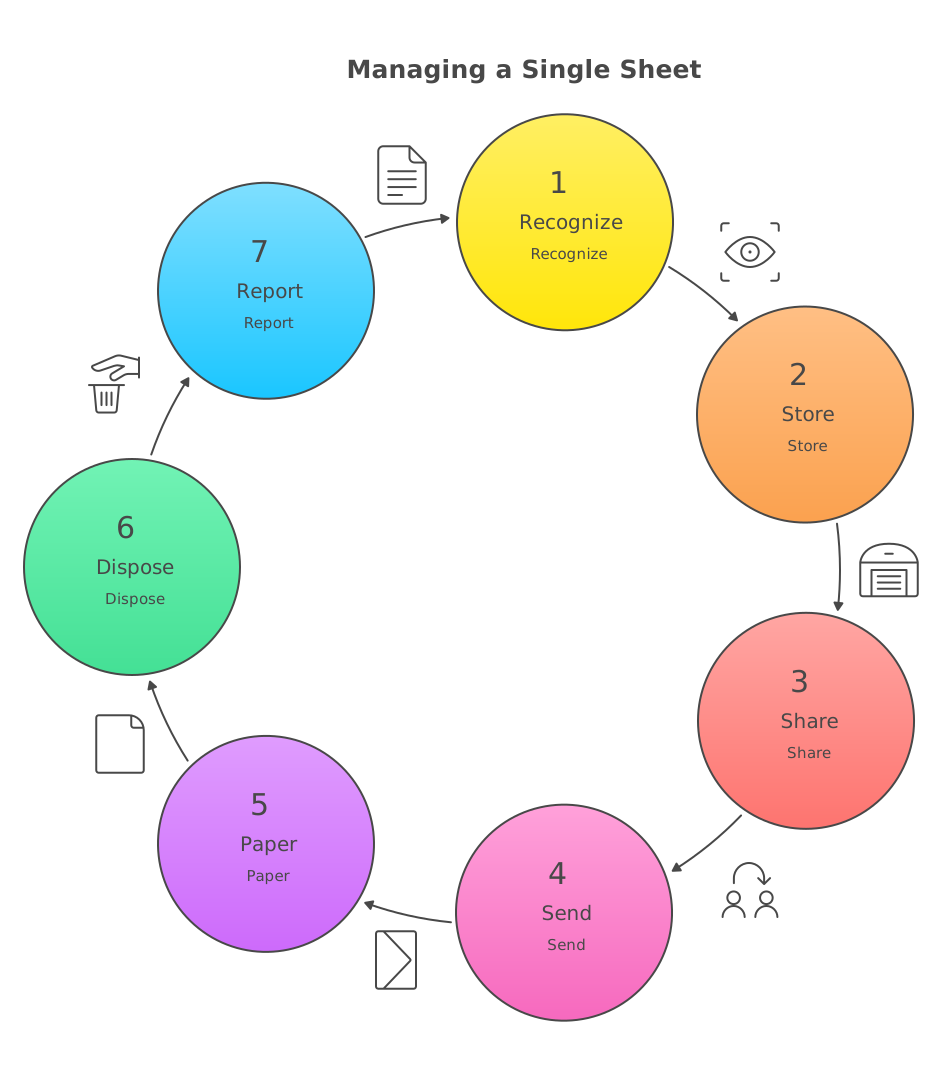
Write a One Page CUI Handling Procedure Your Civilian Staff Will Actually Follow
Your staff will not read a forty page policy, but they will follow one clear page. Here is what belongs on a CUI handling procedure for civilian contractors, and what does not.
Read more
Before You Paste: The AI Tool Rule Every GSA Schedule Contractor Needs
A reported ChatGPT conversation told a user to paste a command into Windows Terminal. Here is what happened, and the one page rule that keeps your team safe.
Read more
Do You Actually Handle CUI? Why Contractors Often Guess Wrong
You cannot tell whether you handle Controlled Unclassified Information by how sensitive it feels. Here is how to actually find out, and why so many contractors guess wrong.
Read moreCUI Incident Reporting and Recordkeeping: What Civilian Agencies Expect Now, and What Is Only Proposed
No new government-wide CUI incident reporting requirement took effect this week. Here is what civilian agencies expect today, what the proposed FAR CUI rule would change, and how to keep records that hold up either way.
Read more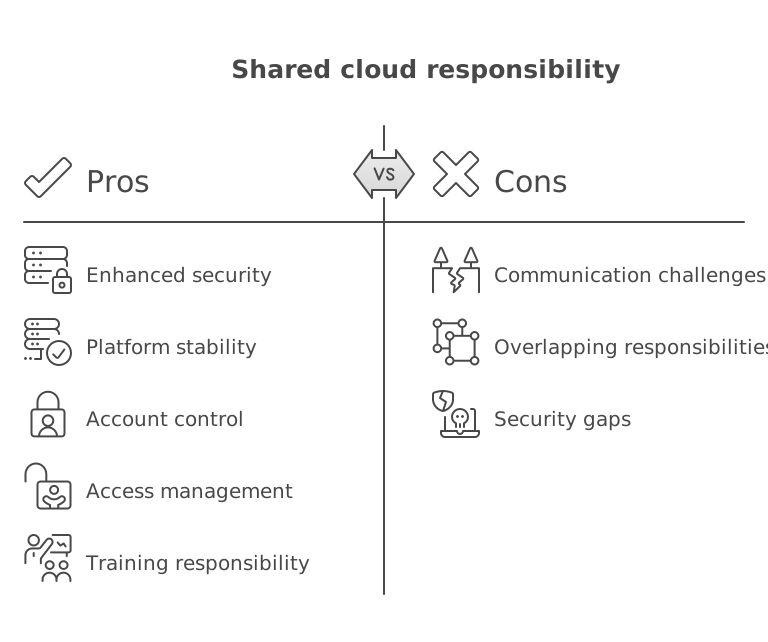
Cloud Services and CUI: The Questions to Ask Your Provider Before You Upload
If your company stores or processes Controlled Unclassified Information in a commercial cloud, the provider is part of how you protect it. Here are the questions to ask before you upload, and what is and is not required today.
Read more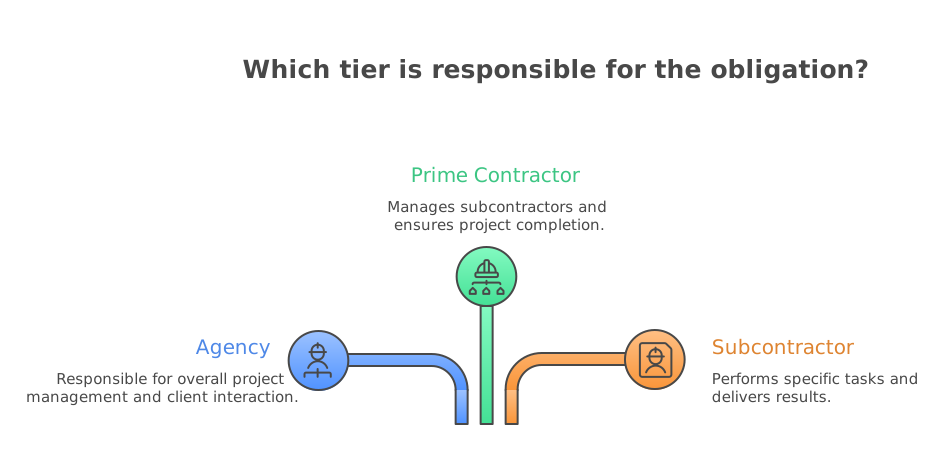
Subcontractor CUI Obligations on a Civilian Prime Contract
If you are a prime on a civilian agency contract handing Controlled Unclassified Information to a subcontractor, the obligations that follow that data come from your contract and your subcontract, not from a government-wide CUI clause that does not exist yet.
Read more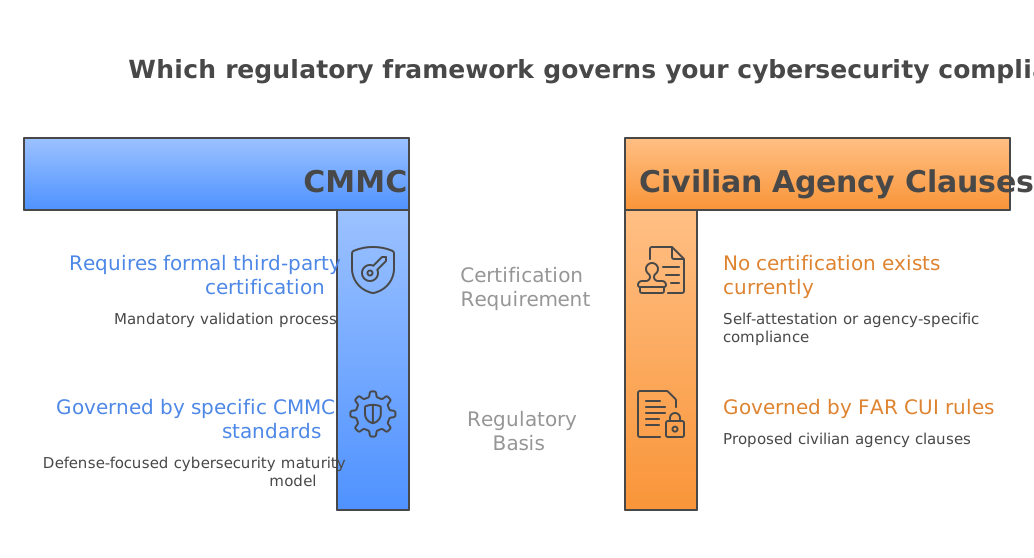
Preparing for CUI Obligations Before a Rule Finalizes
The governmentwide FAR rule on Controlled Unclassified Information is proposed, not final, and no one can tell you with certainty when it will take effect. That does not mean you have nothing to do, because contractors already carry CUI obligations today through agency clauses and contract terms.
Read moreWhat Your Score of Record Tells a Contracting Officer
Your Score of Record is a single number, a date and a scope, and a contracting officer can absorb all three in about ten seconds. Here is what it actually signals, and whether any of it applies if you only sell to civilian agencies.
Read moreNIST 800-171 for Civilian Contractors: Where to Start
The FAR CUI rule remains proposed, not final. Here is the gap between what civilian contractors owe today and what is clearly coming, and a starting sequence that holds its value no matter how the final rule lands.
Read more
Your Agency Already Has a CUI Clause. It Is Not Waiting for the FAR Rule.
The FAR CUI rule remains proposed, but nothing about that status stops a civilian agency from putting CUI safeguarding language in your contract today. The clauses that bind you are the ones printed in your award, not the ones pending in the Federal Register.
Read moreFCI vs CUI: The Distinction That Sets Your Scope
Federal Contract Information and Controlled Unclassified Information come from different authorities and carry different obligations. That difference decides which systems fall inside your boundary and how much you should be spending right now.
Read moreCUI Marking and Handling: The Basics Civilian Agencies Expect
Most CUI failures on civilian contracts are marking and handling mistakes, not breaches. Here is what agencies expect today, what the proposed FAR CUI rule would add later, and how to get it right.
Read moreCMMC Is Paused. The FAR CUI Rule Is Not. Here Is Why That Matters.
The CMMC Phase 2 pause applies only to Department of War contracts. The proposed FAR CUI rule reaches every federal contractor and it is still moving. Here is what GSA Schedule holders should do now.
Read more
Teaming Agreements on the GSA Schedule: How Small Businesses Win Bigger Contracts
Teaming agreements let GSA schedule contractors pursue larger, more complex task orders by combining capabilities. Learn how to structure the arrangement, what the agreement must cover, and how to find partners who make your team stronger.
Read more
Do You Actually Handle CUI? Most Contractors Guess, and Most Guess Wrong
Most federal contractors answer the CUI question from memory rather than from evidence. Here is how to work it out systematically from your contracts, your data flows, and the NARA CUI Registry.
Read more
GSA Schedule Pricing Strategy: How to Stay Competitive and Compliant in 2026
GSA schedule pricing is a long-term strategic decision. Learn how to set competitive, defensible rates, use your Economic Price Adjustment clause, and keep pace with market changes over the full life of your contract.
Read more
Building a Strong Past Performance Record for GSA Contracts
Past performance is evaluated in every GSA schedule offer and task order competition. Learn what counts, how to document it with specifics, and how to build a record that gives you a competitive edge in every federal pursuit.
Read more
How to Win on GSA eBuy: A Guide for Schedule Holders in 2026
GSA eBuy delivers targeted task order opportunities directly to schedule holders. Learn how to monitor solicitations, write competitive responses, and build a steady federal pipeline through the platform.
Read more
GSA Schedule Contract Modifications: A Practical Guide for 2026
Pricing changes, new offerings, company updates: all of these require a formal modification to your GSA schedule contract. Understanding how modifications work keeps your contract compliant and your catalog accurate for agency buyers.
Read more
CMMC 2.0 and GSA Contractors: What You Need to Know in 2026
If your business supports defense-related federal work, CMMC 2.0 adds a compliance layer on top of existing NIST 800-171 requirements. Here is what it means for GSA contractors and how to prepare before it appears in your next solicitation.
Read more
How to Write a Winning GSA Schedule Proposal in 2026
A GSA schedule proposal is a formal offer to the federal government, and the quality of your submission directly affects whether you get approved and how long it takes. Here is what contracting officers actually look for.
Read more
Navigating the OneGov Initiative: Consolidating Federal Procurement for Success
The OneGov initiative is consolidating multiple federal procurement vehicles into a single unified platform. Understanding OneGov initiative navigation now, before full implementation, is the key to protecting your contracts and capturing new opportunities in a restructured federal market.
Read more
Expanding Horizons: GSA Cooperative Purchasing Opens New Markets for Your Schedule
Most contractors think of the GSA schedule as a federal-only tool. But GSA cooperative purchasing allows state, local, tribal, and educational entities to buy from your contract too, dramatically expanding your market without additional contracting overhead.
Read more
Why the GSA First Policy Makes Getting on Schedule a Critical Priority
Federal procurement regulations require agencies to consider GSA schedule contracts before looking elsewhere. Vendors without a schedule contract are invisible to a significant share of federal buyers. Understanding this policy is the first step to fixing that.
Read more
Organization-Defined Parameters (ODPs) in NIST 800-171 Rev 3: How to Use Them
Organization Defined Parameters in NIST 800-171 Rev 3 let contractors customize their security controls based on their specific risk profile. This guide explains what ODPs are, how to define them correctly, and the common mistakes to avoid.
Read more
GSA Transactional Data Reporting (TDR): What It Requires of Your Contract in 2026
Starting in 2026, Transactional Data Reporting (TDR) becomes mandatory for all GSA Schedule SINs. Understanding the full Transactional Data Reporting impact, from pricing relief to system requirements, is critical for every MAS contractor.
Read more
10 Key Advantages Small Businesses Have on the GSA Schedule
Approximately 35% of MAS sales go to small businesses, and for good reason. The GSA schedule is designed with built-in advantages that give smaller firms a real competitive edge against larger rivals. Here are 10 you should be using right now.
Read more
2025-2026 Top Revenue Categories on the GSA Schedule: Where to Play and Win
Federal spending through the GSA schedule has never been higher. Understanding which GSA Schedule revenue categories are growing fastest, and why, is the first step to capturing your share of this expanding market.
Read more
Discover the Power of a Free GSA Readiness Assessment: Your First Step to Federal Contracts
Every successful federal contracting journey starts with an honest evaluation of where you stand. A free GSA readiness assessment gives you a clear picture of your strengths, gaps, and the exact steps needed to qualify for a GSA schedule contract.
Read more
2026 Essential Insights into GSA Schedule Rightsizing: What Contractors Must Do
The GSA rightsizing initiative is simplifying and modernizing the Multiple Award Schedule. Contractors must act now to understand clause changes, new reporting requirements, and what the OneGov consolidation means for their contracts.
Read more
NIST 800-171 Rev 3 for GSA Contractors: What Changed and How to Comply in 2026
The 2026 updates to NIST 800-171 Rev 3 introduced significant changes every GSA contractor must understand. This guide walks you through the key revisions, practical compliance steps, and how to assess your readiness.
Read moreReady to Check Your GSA Readiness?
Take our free 19-question assessment and get a personalized readiness score with a clear action plan — in minutes.
Start Free Assessment